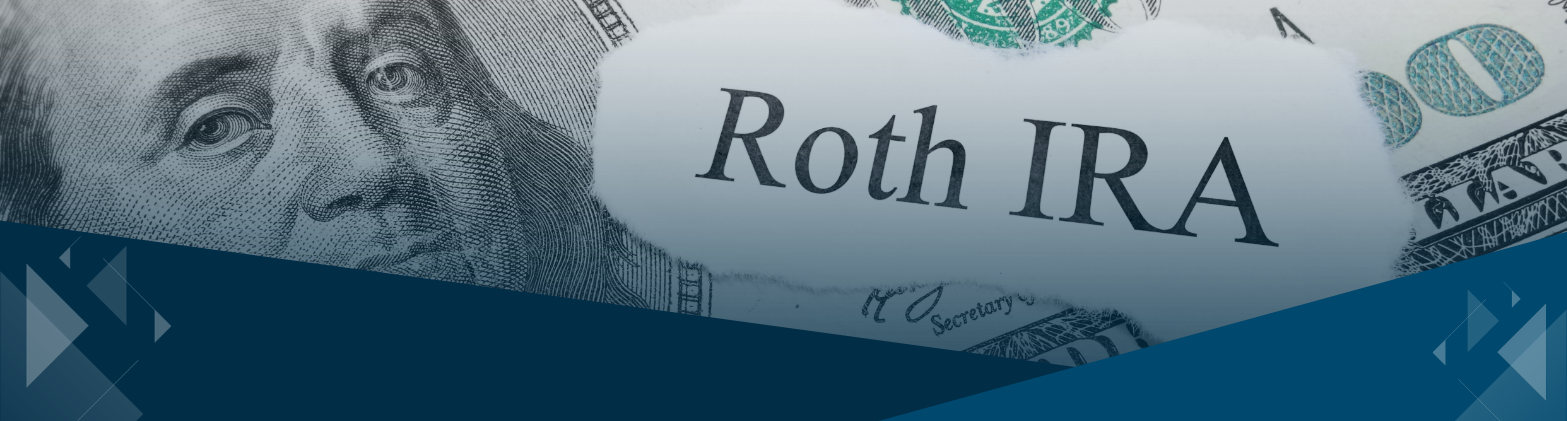
A Roth conversion can be one of the most powerful long-term tax moves available to high earners — but only when the timing and amount are right for your specific situation. The core question is not whether Roth accounts are good. It is whether paying taxes on converted funds today produces a better after-tax outcome than deferring that tax into the future. That answer depends on your current tax bracket, your expected future bracket, your investment horizon, your ability to pay the conversion tax from outside the account, and how the conversion interacts with your other income sources. Mid-year is an ideal time to model this, because you have enough actual income data to project where your bracket lands and enough runway to execute a conversion before December 31.
The conventional advice on Roth conversions — convert when your bracket is low, defer when it is high — is directionally correct but incomplete for high earners. The reality is more nuanced, and the decisions that make Roth conversions valuable for a household earning $400,000 per year look very different from those that make sense for someone just starting out.
High earners face a specific set of planning variables. Their current brackets are already elevated, so conversions are never cheap. But they also accumulate large pre-tax retirement balances quickly, which means the future required minimum distributions (RMDs) will generate substantial taxable income regardless of whether they convert. They often have years in which income dips — a business transition, a gap between positions, a year with fewer stock vestings — that create temporary conversion opportunities. And they frequently have the ability to pay conversion taxes from taxable accounts rather than from the IRA itself, which is the only way a conversion makes long-term mathematical sense.
A tax advisor who understands this complexity can model multi-year Roth conversion strategies that smooth your lifetime tax bill rather than minimize this year's return. That is a different objective, and it requires a different kind of planning conversation than what most compliance-focused firms offer.
Business Advisory and Accounting Partners works with high-earning households on exactly this kind of multi-year tax strategy — integrating Roth conversion decisions with retirement planning, investment timing, and income management across years.
The fundamental math of a Roth conversion is this: you pay tax on the converted amount at your current rate, and the converted funds plus all future growth come out tax-free in retirement. The conversion wins when your current rate is lower than your expected future rate.
For high earners, the future bracket question has become more answerable since the One Big Beautiful Bill Act made individual tax rates permanent. The current rate structure — with the top bracket at 37% applying to income above $640,600 for single filers and $768,700 for married filing jointly— is now stable for multi-year planning purposes. That removes the legislative uncertainty that previously complicated long-horizon Roth modeling.
The more relevant question for many high earners is not the top rate but the transition: what will your taxable income look like in retirement when RMDs begin? If your pre-tax balances are large and growing, your future RMDs could push you into the same or higher bracket you are in today — making conversion at current rates look attractive by comparison.
This is a non-negotiable for Roth conversions to work mathematically. If you pay the tax on a conversion by withholding it from the converted amount itself — that is, converting $100,000 and withholding $32,000 for taxes — you are effectively reducing the amount that enters the Roth account and compounding from a smaller base. The conversion math typically only favors the Roth when the full converted amount goes into the account and the tax is paid from a separate taxable source.
For high earners with taxable investment accounts or strong cash flow, paying the conversion tax from outside the IRA is usually feasible. For those who cannot, a partial conversion of a smaller amount — sized to what they can fund externally — often makes more sense than no conversion at all.
One of the most effective Roth conversion strategies for high earners is bracket filling: identifying how much additional income you can take in the current year before crossing into the next rate tier, and converting that amount. This is a mid-year calculation, not a year-end one, because it requires knowing your actual year-to-date income, your projected income for the remainder of the year, and the exact thresholds where your bracket changes.
According to guidance from the Tax Foundation, even modest bracket-filling conversions executed consistently over five to ten years can meaningfully reduce lifetime tax liability by drawing down pre-tax balances during years when the effective conversion cost is at its lowest relative point. The strategy requires discipline and multi-year modeling — but not heroic tax rates.
A Roth conversion adds to your adjusted gross income in the year it occurs. For high earners, that has downstream effects beyond the income tax on the converted amount. A large conversion can trigger or increase exposure to the 3.8% net investment income tax (NIIT), affect Medicare premium surcharges (IRMAA) two years forward, phase out certain deductions, or interact with the SALT cap that is now temporarily elevated to $40,000 through 2029.
These interactions make Roth conversions a coordination problem, not just a rate comparison. A conversion that looks favorable in isolation may have a higher effective cost when all of the downstream effects are modeled. Your advisory team will run the full picture before recommending an amount.
Roth conversions require time to recoup the upfront tax cost. The break-even point — the number of years of tax-free growth required to offset the tax paid at conversion — depends on the conversion tax rate, the investment return, and whether the tax was paid from inside or outside the account. According to analysis from the Bradford Tax Institute, conversions paid from external funds and invested over long horizons consistently outperform equivalent pre-tax balances at high tax rates. The shorter the remaining investment horizon, the harder it is for the Roth math to work in your favor.
For high earners in their 40s and 50s, a 20-to-30-year investment horizon often makes partial conversions highly attractive even at elevated current rates. For those closer to retirement, the calculation is more sensitive and requires more precise modeling.
This is a fictional example to illustrate how Business Advisory and Accounting Partners would advise a client in this situation.
Susan is a senior engineering director in Washington state, earning $380,000 in W-2 income. Her household has approximately $1.4 million in pre-tax 401(k) and rollover IRA balances accumulated over a 20-year career. She and her husband file jointly, have two children in their teens, and have been contributing the maximum to their 401(k)s each year. She has heard about Roth conversions but has always assumed her income was too high to make them worthwhile.
In July 2026, Susan's income is tracking close to her prior year — no unusual events, no windfalls, no income dips. On the surface, it looks like a poor year for a conversion: her bracket is solidly in the 35% range and her current tax bill is already substantial.
Business Advisory and Accounting Partners would begin by modeling Susan's projected future RMD trajectory. With $1.4 million growing at a conservative rate over 20 years, her required minimum distributions beginning at age 73 would likely push her into the same or higher bracket she is in today — generating substantial taxable income she cannot control or reduce. The analysis reframes the question: it is not whether a conversion is cheap today. It is whether paying 35% now on a partial conversion is better than paying 37% or more later on a mandatory distribution.
The advisory team would identify a bracket-filling opportunity: Susan and her husband's taxable income in 2026 leaves a gap before reaching the 37% threshold. Converting an amount sized to fill that gap — in this case approximately $85,000 — would trigger tax at the 35% rate, paid from their taxable brokerage account, on an amount that would otherwise be distributed and taxed at potentially higher future rates.
Business Advisory and Accounting Partners would also model the IRMAA exposure, the interaction with their elevated SALT deduction, and the long-term projection under three scenarios: no conversion, the bracket-filling amount, and a larger conversion. The result is a decision made with full information rather than a general sense that Roth conversions are or are not worth it.
If you see pieces of your own situation in this example, it may be time to sit down with a Business Advisory and Accounting Partners business advisor and model what a Roth conversion strategy looks like for your specific numbers.
Business Advisory and Accounting Partners, powered by Harness, treats Roth conversion decisions as multi-year coordination problems, not annual filing questions. The firm integrates conversion analysis with investment timing, retirement plan contributions, income management, and estate planning considerations — because a conversion that is efficient in isolation may not be efficient in context.
The firm's individual advisory work is built around the emerging high-net-worth household: high earners who are building substantial wealth, managing increasing complexity, and making decisions that will compound over decades. Roth conversion strategy is exactly the kind of forward-looking work that separates proactive planning from reactive compliance.
An individual tax planning conversation at Business Advisory and Accounting Partners is a structured review of your specific financial picture. For Roth conversion planning, that means walking through your current income, your existing pre-tax balances, your projected retirement income needs, and the specific interactions — NIIT, IRMAA, SALT, bracket thresholds — that affect the cost of a conversion in your situation.
You will leave with a clear picture of whether a conversion makes sense this year, what amount is optimal given your bracket and cash position, and how this decision fits into a longer-term strategy. There is no obligation to move forward beyond the meeting. It is a professional conversation designed to give you the clarity you need to decide.
| If you want to know whether a Roth conversion makes sense for your situation this year, schedule a conversation with Business Advisory and Accounting Partners powered by Harness. |
Book your advisory fit conversation at: https://busadvisory.com/schedule-your-advisory-fit-meeting/
It depends on the specifics of your situation, not your income level alone. The key factors are your current versus expected future tax bracket, your ability to pay the conversion tax from outside the IRA, the size of your existing pre-tax balances and their projected RMD trajectory, and how the conversion interacts with other income events in the same year. High earners often have large pre-tax balances that will generate substantial mandatory distributions in retirement — making strategic partial conversions at current rates look favorable even when current brackets are elevated.
Bracket filling is a strategy of converting just enough pre-tax IRA or 401(k) funds to use up the remaining room in your current tax bracket before crossing into the next rate tier. It requires knowing your projected year-to-date income and identifying the exact dollar gap to the next threshold. Executed consistently over multiple years, bracket filling draws down pre-tax balances at the lowest effective rate available each year and reduces the future RMD burden that would otherwise create uncontrollable taxable income in retirement.
Paying the conversion tax by withholding from the converted amount itself reduces the funds that enter the Roth account and eliminates the compounding benefit on that withheld amount. The math of a Roth conversion typically only works in your favor when the full converted amount goes into the Roth account and the tax is funded from a separate taxable source. If you cannot fund the tax externally, converting a smaller amount — sized to what you can cover without touching the IRA — is usually the better approach.
A Roth conversion increases your modified adjusted gross income (MAGI) in the year of the conversion. If that increase pushes your MAGI above the thresholds for Medicare premium surcharges — known as IRMAA — you may pay higher Medicare Part B and Part D premiums two years later. IRMAA is tiered and based on prior-year income, so a conversion in 2026 affects 2028 Medicare costs. This interaction should be modeled before executing a large conversion, particularly for those approaching or already in Medicare.
Mid-year — specifically Q3 — is the ideal planning window for Roth conversions. By July you have enough actual income data to project your full-year bracket accurately, and you still have time to execute the conversion before December 31. Converting too early in the year risks overshooting your bracket if income comes in higher than expected. Converting in December leaves little time to react if other income events change the picture. A mid-year projection with a Q4 execution is the most common approach for clients working with Business Advisory and Accounting Partners.
Now, if you have not already. The analysis requires a full picture of your current income, pre-tax balances, projected retirement income, and the downstream effects of the conversion. Business Advisory and Accounting Partners works with high-earning individuals and households on multi-year Roth conversion strategies as part of an ongoing individual tax advisory engagement. Schedule a conversation at https://busadvisory.com/individual-tax-advisory-planning/